Let the Body Rest — Recovery Is Where You Get Stronger
The workout itself doesn't make you stronger. It makes you temporarily weaker, more damaged, more depleted. Everything you're actually training for happens later — while you do nothing.
Walk out of a hard session and measure yourself honestly: you are weaker than when you walked in. Stronger comes later — and only if you let it.
This is the part the "no days off" crowd gets exactly backward. Training is a stimulus, not an achievement. It's the question you ask the body. Rest is when the body answers — by rebuilding the tissue you stressed slightly stronger than before, so it can handle the demand next time.
Skip the rest and you keep asking the question without ever waiting for the reply. The result isn't faster progress. It's a stall, and eventually a step backward.
The growth happens on a clock
After a hard resistance session, muscle protein synthesis — the literal machinery of building tissue — stays elevated for roughly 24 to 48 hours. That window is the workout actually "working." Train the same muscle into the ground before it finishes the job and you interrupt the very process you trained to start.
You don't grow in the gym. You grow in the 48 hours afterward — and most of that happens while you're asleep.
Sleep is the lever almost nobody wants to hear about, because it can't be bought or hacked. Deep sleep is when your body releases its largest natural pulses of growth hormone and does its heaviest repair work. Short sleep measurably blunts recovery, drags down performance, and — shown clearly in athlete data — raises injury risk. You can run a flawless program and quietly cancel a chunk of it by sleeping six hours.
Muscle protein synthesis is elevated for about 24–48 hours after resistance exercise — the true window of adaptation. Sleep restriction is associated with impaired recovery and notably higher injury rates in athletes. And here's the myth-buster: soreness is driven heavily by novelty, and your body adapts to repeated exposure (the "repeated bout effect"), so muscle soreness is a poor measure of whether a workout was productive.
Soreness is not a scoreboard
Somewhere we decided that limping the next day means the workout counted. It doesn't. Soreness mostly tells you that you did something new or unfamiliar — not that you did something effective. Do the same movement regularly and the soreness fades while the gains keep coming. Chasing the ache just steers you toward random, beat-up training instead of consistent, productive training.
How to recover like it's part of the plan
- Give a muscle ~48 hours. Let a trained muscle finish rebuilding before you hammer it again. Rotate movements or train other areas in between.
- Protect sleep first. Seven to nine hours is the most powerful recovery tool you own, and it's free.
- Stop measuring by soreness. Judge sessions by performance over weeks — more reps, more load, better movement — not by next-day pain.
- Deload on purpose. Every several weeks, pull volume back for a week. Planned rest prevents the forced kind.
The short version
- Training is the stimulus; rest is where adaptation happens.
- Muscle-building stays switched on for 24–48 hours after a session.
- Sleep is the highest-leverage, lowest-cost recovery tool you have.
- Soreness signals novelty, not effectiveness — don't chase it.
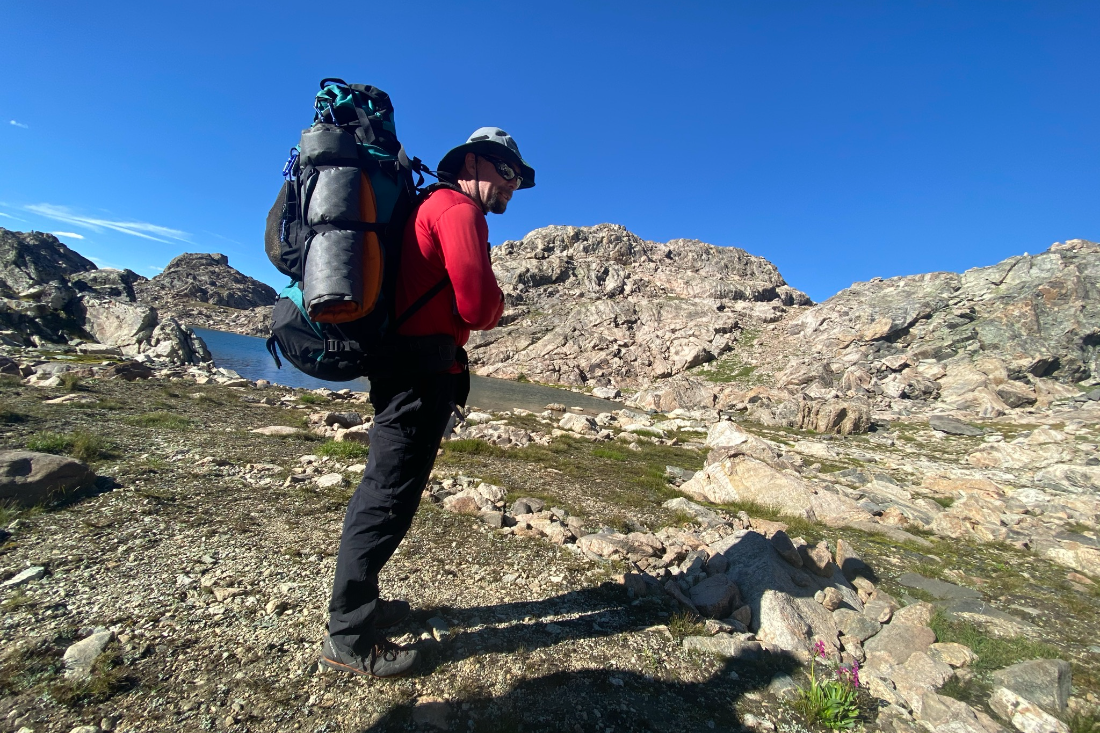
The mountains reward people who can come back day after day, not people who blow themselves up once. Rest isn't the reward for training. It's part of the training — arguably the part that does the building.
Training hard but not progressing?
Nine times out of ten it's a recovery problem, not an effort problem. Let's build a program that schedules rest as deliberately as the work.
Book a Session →Sources & further reading
Damas F, et al. "Resistance training-induced changes in muscle protein synthesis." Journal of Physiology, 2016. · Dattilo M, et al. "Sleep and muscle recovery: endocrinological and molecular basis." Medical Hypotheses, 2011. · Milewski MD, et al. "Chronic lack of sleep is associated with increased sports injuries in adolescent athletes." Journal of Pediatric Orthopaedics, 2014. · McHugh MP. "The repeated bout effect." Scandinavian Journal of Medicine & Science in Sports, 2003.